
Gallo Lab Publications
PubMed
NIH National Library of Medicine
National Center for Biotechnology Information (NCBI): Gallo PubMed References (NCBI)
Featured Articles
2026
Featured Articles
2026

Simmons JS, Nakatsuji T, Li F, Aguilera C, Numata T, Cavagnero KJ, Almoughrabie S, Mares AR, Sauceda C, Castaneda J, Gonzalez DJ, Hoffman HM, Gallo RL. Sci Adv. 2026 Aug 14;12(33):eaee5871. doi: 10.1126/sciadv.aee5871. Epub 2026 Aug 12. PMID: 42585333
Dokoshi T, Palomo-Irigoyen M, Dai K, Hashimoto T, Konishi H, Hivert L, Bagood M, Chan H, Almoughrabie S, Nakamura Y, Cavagnero KJ, Nakatsuji T, Fujiya M, Gallo RL. Cell Mol Immunol. 2026 Aug;23(8):972-982. doi: 10.1038/s41423-026-01442-7. Epub 2026 Jun 22. PMID: 42332095
Disease context dictates the cellular targets of IL-17 in inflammatory skin disease.
Cavagnero KJ, Li F, Jo H, Aguilera C, Fox J, Kirma J, Bogle R, Kahlenberg JM, Tsoi LC, Gudjonsson JE, Gallo RL. J Invest Dermatol. 2026 Jul 25:S0022-202X(26)02687-4. doi: 10.1016/j.jid.2026.07.012. PMID: 42498210
Dermal fibroblasts respond to IL-4 and IL-13 and promote T cell recruitment in atopic dermatitis.
Numata T, Shia M, Nakamura Y, Li F, Chan H, Nakatsuji T, Cavagnero KJ, Simmons J, Li H, Joshi AA, Palomo-Irigoyen M, Gallo RL. J Clin Invest. 2026 Jan 22;136(5):e196108. doi: 10.1172/JCI196108. eCollection 2026 Mar 2. PMID: 41569693
2025
Chan H, Li F, Dokoshi T, Cavagnero KJ, Li Q, Chen Y, Aguilera C, Nakatsuji T, Liu E, Indra A, Yang D, Valentina O, Numata T, Crown B, Li H, Williams KJ, Chiu IM, Bensinger SJ, Chen W, Gallo RL. Sci Immunol. 2025 Apr 11;10(106):eads0519. doi: 10.1126/sciimmunol.ads0519. Epub 2025 Apr 11. PMID: 40215323
Bagood MD, Marjanovic J, Jiang N, Chan H, Dokoshi T, Cavagnero KJ, Li F, Roso-Mares A, Almoughrabie S, Liu E, Pastar I, Tomic-Canic M, Horswill AR, Gallo RL. J Clin Invest. 2025 Oct 15;135(20):e190411. doi: 10.1172/JCI190411. eCollection 2025 Oct 15. PMID: 41090347
Gallo RL, Nakatsuji T, Mares AR, Moon J, Osuoji O, Li V, Fernandez-Desoto A, Wu A, Nodzenski M, David G, Coleman A, Hata TR. J Invest Dermatol. 2026 Apr;146(4):1157-1160.e7. doi: 10.1016/j.jid.2025.09.014. Epub 2025 Sep 23. PMID: 40998240
Targeting fibroblast TNF receptor 1 attenuates type 17 skin inflammation.
Cavagnero KJ, Li F, Aguilera C, Jo H, Palomo-Irigoyen M, Mares AR, Chan H, Gallo RL. Cell Rep. 2025 Aug 26;44(8):116111. doi: 10.1016/j.celrep.2025.116111. Epub 2025 Aug 12. PMID: 40802508
2025
Bacterial Chatter Slows Wound Healing
Research Alerts
Bacterial Chatter Slows Wound Healing

Published Date

Article Content
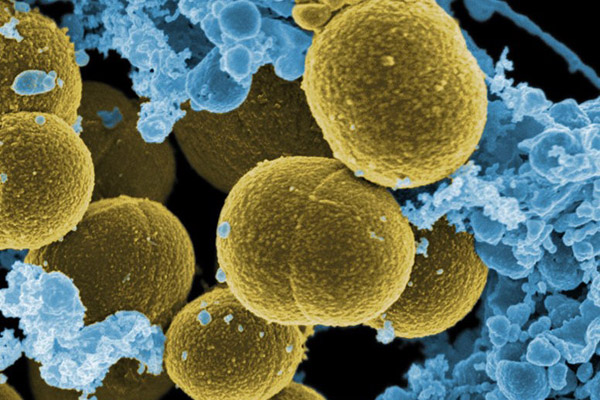
Researchers at University of California San Diego School of Medicine have discovered a previously unrecognized mechanism by which Staphylococcus aureus — one of the most common causes of skin and soft tissue infections worldwide — delays wound healing. The new study reveals that quorum sensing — a process in which bacteria communicate and coordinate behavior with one another — is a key driver of delayed healing in wounds infected by S. aureus. The findings suggest that by using drugs to interfere with quorum sensing, it could be possible to enhance wound healing without relying on antibiotics, reducing the risk of resistance and improving healing outcomes for patients.
Despite significant advances in wound care, infections by S. aureus, particularly methicillin-resistant strains (MRSA), remain a leading cause of delayed wound healing and poor patient outcomes around the world. MRSA infection is particularly common in hospital settings, accounting for a significant portion of surgical site infections, bloodstream infections and pneumonia in hospitalized patients.
The researchers found:
- In both mouse and human models of wound healing, infection with S. aureus activated the bacterium’s accessory gene regulator (agr) quorum-sensing system, a molecular “switch” that controls bacterial communication and virulence.
- Activating the agr system led to a dramatic suppression of key metabolic genes in keratinocytes, cells that help rebuild the skin barrier during wound healing.
- Disruption of the agr system in S. aureus restored normal wound healing and keratinocyte function, even when the bacteria were present at high levels.
- In contrast, exposure to harmless bacteria such as Staphylococcus hominis did not impair healing and even promoted beneficial metabolic activity in skin cells.
These findings have significant implications for the treatment of chronic wounds and hospital-acquired infections. By targeting the agr system, it may be possible to disarm S. aureus without relying on antibiotics, reducing the risk of antibiotic resistance and improving healing outcomes for patients. The study also highlights the importance of the wound microbiome and suggests that therapies which preserve or restore healthy skin bacteria could enhance recovery.
While further research and clinical trials are needed to translate these insights into specific therapies, the results open the door to innovative approaches for managing wound infections, potentially transforming care for patients with chronic and hard-to-heal wounds.
The study, published in The Journal of Clinical Investigation, was led by Michelle D. Bagood, Ph.D., a postdoctoral researcher, and Richard L. Gallo, M.D., Ph.D., professor and chair of the Department of Dermatology at UC San Diego School of Medicine. The work was funded, in part, by grants from the National Institutes of Health. Gallo is a cofounder, scientific advisor, consultant, and equity holder of MatriSys Bioscience.
Read more news about: School of Medicine, Health Sciences, UC San Diego Health
2024
CXCL12+ dermal fibroblasts promote neutrophil recruitment and host defense by recognition of IL-17. Cavagnero KJ, Li F, Dokoshi T, Nakatsuji T, O'Neill AM, Aguilera C, Liu E, Shia M, Osuoji O, Hata T, Gallo RL. J Exp Med. 2024 Apr 1;221(4):e20231425. doi: 10.1084/jem.20231425. Epub 2024 Feb 23. PMID: 38393304
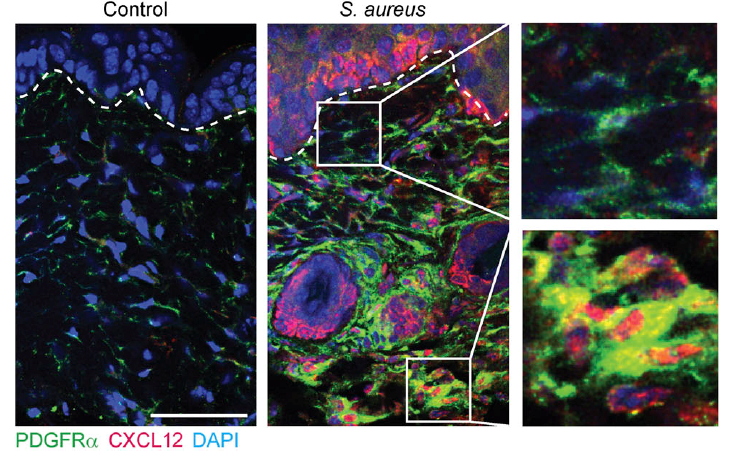
Dokoshi T, Chen Y, Cavagnero KJ, Rahman G, Hakim D, Brinton S, Schwarz H, Brown EA, O'Neill A, Nakamura Y, Li F, Salzman NH, Knight R, Gallo RL. Nat Commun. 2024 Apr 8;15(1):3009. doi: 10.1038/s41467-024-47072-3. PMID: 38589392
Nakamura Y, Kulkarni NN, Takahashi T, Alimohamadi H, Dokoshi T, Liu E, Shia M, Numata T, Luo EW, Gombart AF, Yang X, Secrest P, Gordts PL, Tsimikas S, Wong GC, Gallo RL. J Clin Invest. 2024 Mar 1;134(5):e172578. doi: 10.1172/JCI172578. PMID: 38194294
2023
Teruaki Nakatsuji, Samantha L. Brinton, Kellen J. Cavagnero, Alan M. O’Neill, Yang Chen, Tatsuya Dokoshi, Anna M. Butcher, Olive C. Osuoji, Faiza Shafiq, Josh L. Espinoza, Christopher L. Dupont, Tissa R. Hata, Richard L. Gallo
Cell Rep. Author manuscript; available in PMC 2023 Jun 28.
Cell Rep. 2023 May 30; 42(5): 112494. Published online 2023 May 10. doi: 10.1016/j.celrep.2023.112494 PMCID:

2022
O'Neill AM, Liggins MC, Seidman JS, Do TH, Li F, Cavagnero KJ, Dokoshi T, Cheng JY, Shafiq F, Hata TR, Gudjonsson JE, Modlin RL, Gallo RL. Sci Transl Med. 2022 Feb 16;14(632):eabh1478. doi: 10.1126/scitranslmed.abh1478. Epub 2022 Feb 16. PMID: 35171653
The Ubiquitous Human Skin Commensal Staphylococcus hominis Protects against Opportunistic Pathogens.
Severn MM, Williams MR, Shahbandi A, Bunch ZL, Lyon LM, Nguyen A, Zaramela LS, Todd DA, Zengler K, Cech NB, Gallo RL, Horswill AR. mBio. 2022 Jun 28;13(3):e0093022. doi: 10.1128/mbio.00930-22. Epub 2022 May 24. PMID: 35608301
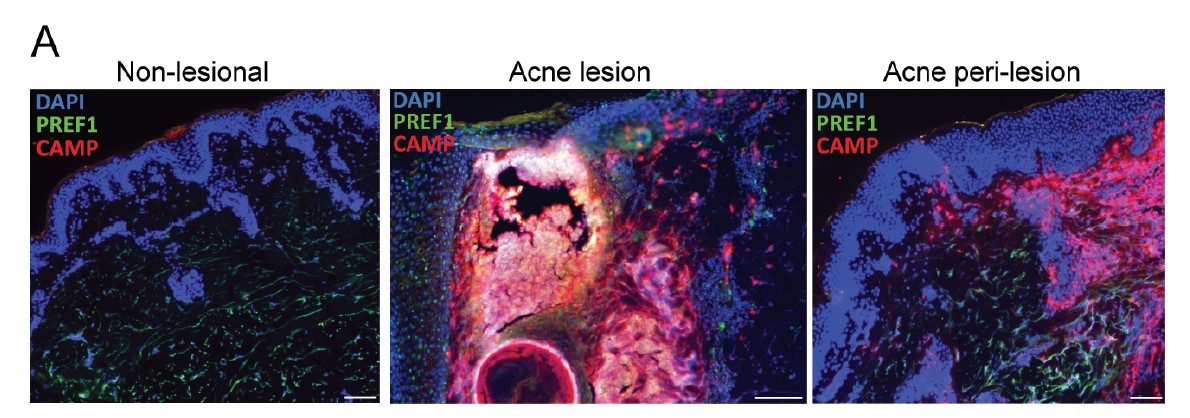
TREM2 macrophages induced by human lipids drive inflammation in acne lesions.
Do TH, Ma F, Andrade PR, Teles R, de Andrade Silva BJ, Hu C, Espinoza A, Hsu JE, Cho CS, Kim M, Xi J, Xing X, Plazyo O, Tsoi LC, Cheng C, Kim J, Bryson BD, O'Neill AM, Colonna M, Gudjonsson JE, Klechevsky E, Lee JH, Gallo RL, Bloom BR, Pellegrini M, Modlin RL. Sci Immunol. 2022 Jul 22;7(73):eabo2787. doi: 10.1126/sciimmunol.abo2787. Epub 2022 Jul 22. PMID: 35867799
2021
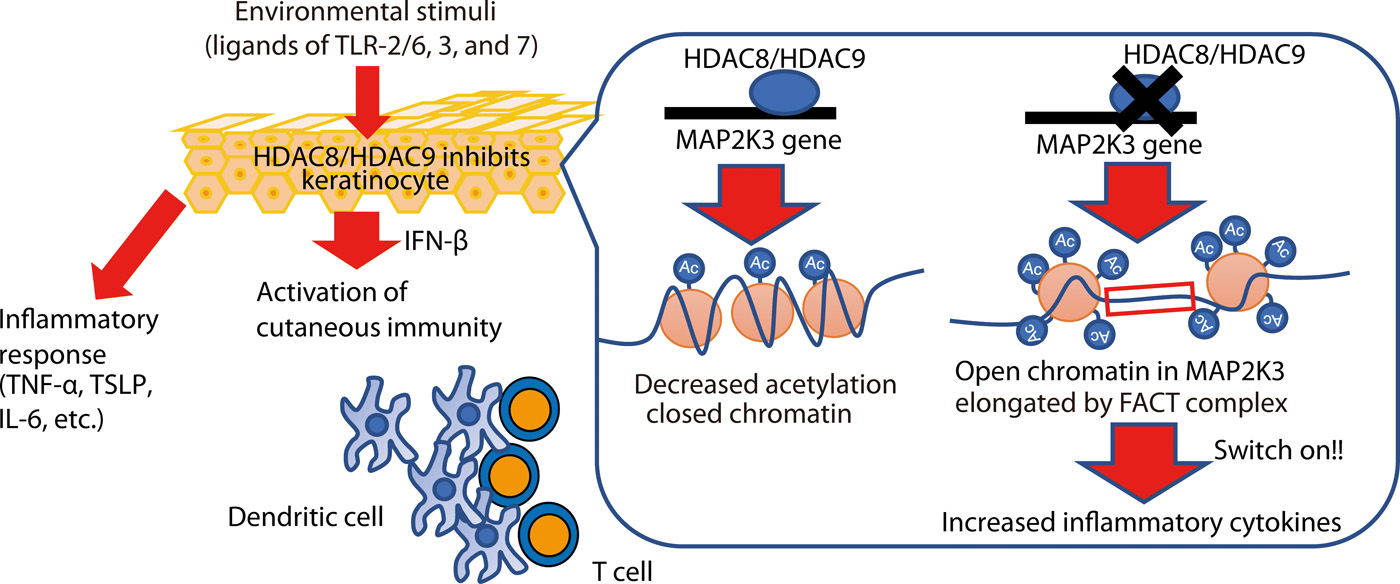
Cutaneous innate immune tolerance is mediated by epigenetic control of MAP2K3 by HDAC8/9
Sawada Y, Nakatsuji T, Dokoshi T, Kulkarni NN, Liggins MC, Sen G, Gallo RL. Cutaneous innate immune tolerance is mediated by epigenetic control of MAP2K3 by HDAC8/9. Sci Immunol. 2021 May 21;6(59):eabe1935. doi: 10.1126/sciimmunol.abe1935. PMID: 34021025.
Development of a human skin commensal microbe for bacteriotherapy of atopic dermatitis and use in a phase 1 randomized clinical trial.
Nakatsuji T, Hata TR, Tong Y, Cheng JY, Shafiq F, Butcher AM, Salem SS, Brinton SL, Rudman Spergel AK, Johnson K, Jepson B, Calatroni A, David G, Ramirez-Gama M, Taylor P, Leung DYM, Gallo RL. Nat Med. 2021 Apr;27(4):700-709. doi: 10.1038/s41591-021-01256-2. Epub 2021 Feb 22. PMID: 33619370
Diet-induced obesity promotes infection by impairment of the innate antimicrobial defense function of dermal adipocyte progenitors.
Zhang LJ, Guerrero-Juarez CF, Chen SX, Zhang X, Yin M, Li F, Wu S, Chen J, Li M, Liu Y, Jiang SIB, Hata T, Plikus MV, Gallo RL. Sci Transl Med. 2021 Jan 20;13(577):eabb5280. doi: 10.1126/scitranslmed.abb5280. PMID: 33472955
2020
Interplay of Staphylococcal and Host Proteases Promotes Skin Barrier Disruption in Netherton Syndrome.
Williams MR, Cau L, Wang Y, Kaul D, Sanford JA, Zaramela LS, Khalil S, Butcher AM, Zengler K, Horswill AR, Dupont CL, Hovnanian A, Gallo RL. Cell Rep. 2020 Mar 3;30(9):2923-2933.e7. doi: 10.1016/j.celrep.2020.02.021. PMID: 32130897
Hyaluronan Degradation by Cemip Regulates Host Defense against Staphylococcus aureus Skin Infection.
Dokoshi T, Zhang LJ, Li F, Nakatsuji T, Butcher A, Yoshida H, Shimoda M, Okada Y, Gallo RL. Cell Rep. 2020 Jan 7;30(1):61-68.e4. doi: 10.1016/j.celrep.2019.12.001. PMID: 31914398
2019
Age-Related Loss of Innate Immune Antimicrobial Function of Dermal Fat Is Mediated by Transforming Growth Factor Beta
Zhang LJ, Chen SX, Guerrero-Juarez CF, Li F, Tong Y, Liang Y, Liggins M, Chen X, Chen H, Li M, Hata T, Zheng Y, Plikus MV, Gallo RL. Immunity. 2019 Jan 15;50(1):121-136.e5. doi: 10.1016/j.immuni.2018.11.003. Epub 2018 Dec 26. PMID: 30594464; PMCID: PMC7191997.

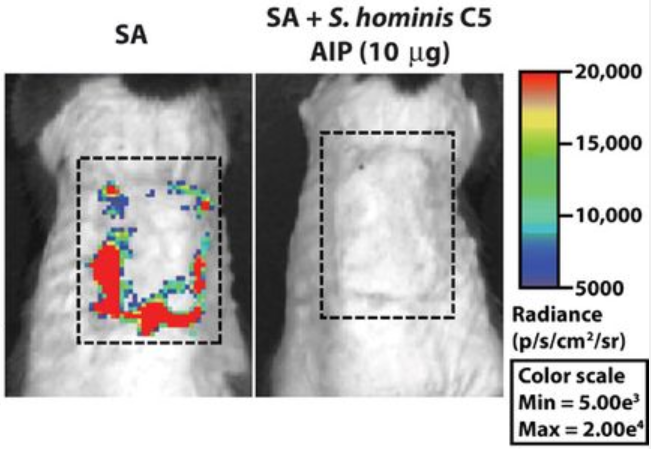
Quorum sensing between bacterial species on the skin protects against epidermal injury in atopic dermatitis
Williams MR, Costa SK, Zaramela LS, Khalil S, Todd DA, Winter HL, Sanford JA, O'Neill AM, Liggins MC, Nakatsuji T, Cech NB, Cheung AL, Zengler K, Horswill AR, Gallo RL. Sci Transl Med. 2019 May 1;11(490):eaat8329. doi: 10.1126/scitranslmed.aat8329. PMID: 31043573; PMCID: PMC7106486.
Antimicrobials from human skin commensal bacteria protect against Staphylococcus aureus and are deficient in atopic dermatitis
Nakatsuji T, Chen TH, Narala S, Chun KA, Two AM, Yun T, Shafiq F, Kotol PF, Bouslimani A, Melnik AV, Latif H, Kim JN, Lockhart A, Artis K, David G, Taylor P, Streib J, Dorrestein PC, Grier A, Gill SR, Zengler K, Hata TR, Leung DY, Gallo RL. Sci Transl Med. 2017 Feb 22;9(378):eaah4680. doi: 10.1126/scitranslmed.aah4680. PMID: 28228596; PMCID: PMC5600545.
2018
Hyaluronidase inhibits reactive adipogenesis and inflammation of colon and skin.
Dokoshi T, Zhang LJ, Nakatsuji T, Adase CA, Sanford JA, Paladini RD, Tanaka H, Fujiya M, Gallo RL. JCI Insight. 2018 Nov 2;3(21):e123072. doi: 10.1172/jci.insight.123072. PMID: 30385720
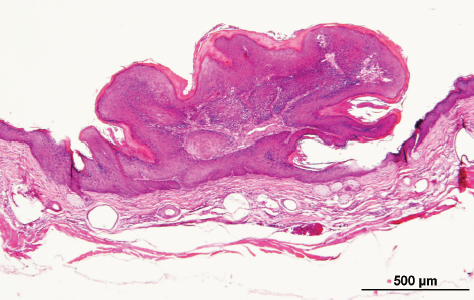
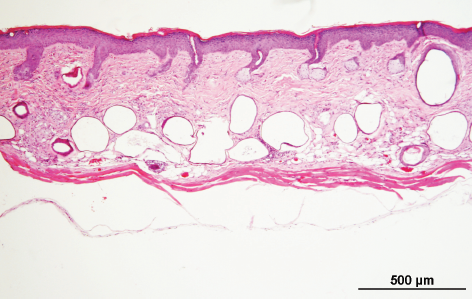
A commensal strain of Staphylococcus epidermidis protects against skin neoplasia
Nakatsuji T, Chen TH, Butcher AM, Trzoss LL, Nam SJ, Shirakawa KT, Zhou W, Oh J, Otto M, Fenical W, Gallo RL. Sci Adv. 2018 Feb 28;4(2):eaao4502. doi: 10.1126/sciadv.aao4502. PMID: 29507878; PMCID: PMC5834004.
S. Epidermidis 1457
S. Epidermidis MO34
2017
Antimicrobials from human skin commensal bacteria protect against Staphylococcus aureus and are deficient in atopic dermatitis.
Nakatsuji T, Chen TH, Narala S, Chun KA, Two AM, Yun T, Shafiq F, Kotol PF, Bouslimani A, Melnik AV, Latif H, Kim JN, Lockhart A, Artis K, David G, Taylor P, Streib J, Dorrestein PC, Grier A, Gill SR, Zengler K, Hata TR, Leung DY, Gallo RL. Sci Transl Med. 2017 Feb 22;9(378):eaah4680. doi: 10.1126/scitranslmed.aah4680. PMID: 28228596
Human Skin Is the Largest Epithelial Surface for Interaction with Microbes.
Gallo RL. J Invest Dermatol. 2017 Jun;137(6):1213-1214. doi: 10.1016/j.jid.2016.11.045. Epub 2017 Apr 8. PMID: 28395897
Notables pre-2017
Antimicrobial Peptides
Zhang LJ, Gallo RL, 2016 Jan 11;26(1):R14-9. doi: 10.1016/j.cub.2015.11.017.

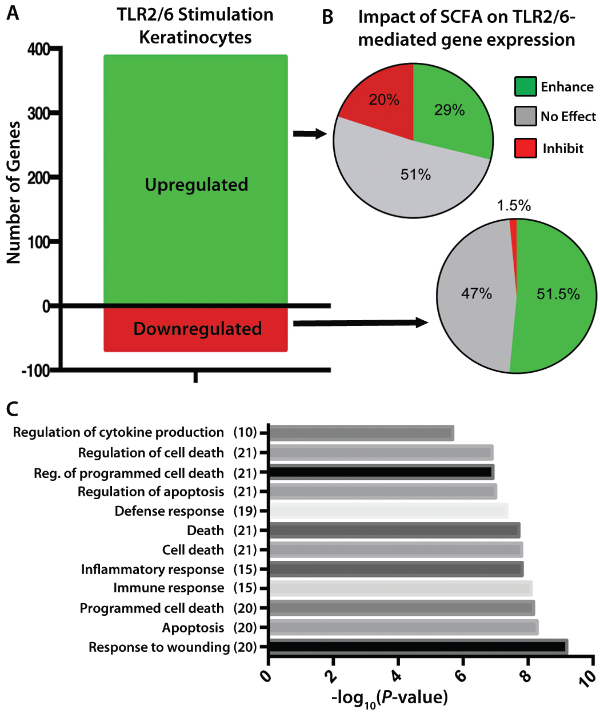
Inhibition of HDAC8 and HDAC9 by microbial short-chain fatty acids breaks immune tolerance of the epidermis to TLR ligands
Sanford JA, Zhang LJ, Williams MR, Gangoiti JA, Huang CM, Gallo RL. Sci Immunol. 2016 Oct 28;1(4):eaah4609. doi: 10.1126/sciimmunol.aah4609. PMID: 28783689.
Innate immunity. Dermal adipocytes protect against invasive Staphylococcus aureus skin infection.
Zhang LJ, Guerrero-Juarez CF, Hata T, Bapat SP, Ramos R, Plikus MV, Gallo RL. Science. 2015 Jan 2;347(6217):67-71. doi: 10.1126/science.1260972. PMID: 25554785
Injury enhances TLR2 function and antimicrobial peptide expression through a vitamin D-dependent mechanism.
Schauber J, Dorschner RA, Coda AB, Büchau AS, Liu PT, Kiken D, Helfrich YR, Kang S, Elalieh HZ, Steinmeyer A, Zügel U, Bikle DD, Modlin RL, Gallo RL. J Clin Invest. 2007 Mar;117(3):803-11. doi: 10.1172/JCI30142. Epub 2007 Feb 8. PMID: 17290304
Toll-like receptor triggering of a vitamin D-mediated human antimicrobial response.
Liu PT, Stenger S, Li H, Wenzel L, Tan BH, Krutzik SR, Ochoa MT, Schauber J, Wu K, Meinken C, Kamen DL, Wagner M, Bals R, Steinmeyer A, Zügel U, Gallo RL, Eisenberg D, Hewison M, Hollis BW, Adams JS, Bloom BR, Modlin RL. Science. 2006 Mar 24;311(5768):1770-3. doi: 10.1126/science.1123933. Epub 2006 Feb 23. PMID: 16497887
The 2011 report on dietary reference intakes for calcium and vitamin D from the Institute of Medicine: what clinicians need to know.
Ross AC, Manson JE, Abrams SA, Aloia JF, Brannon PM, Clinton SK, Durazo-Arvizu RA, Gallagher JC, Gallo RL, Jones G, Kovacs CS, Mayne ST, Rosen CJ, Shapses SA. J Clin Endocrinol Metab. 2011 Jan;96(1):53-8. doi: 10.1210/jc.2010-2704. Epub 2010 Nov 29. PMID: 21118827
Commensal bacteria regulate Toll-like receptor 3-dependent inflammation after skin injury.
Lai Y, Di Nardo A, Nakatsuji T, Leichtle A, Yang Y, Cogen AL, Wu ZR, Hooper LV, Schmidt RR, von Aulock S, Radek KA, Huang CM, Ryan AF, Gallo RL. Nat Med. 2009 Dec;15(12):1377-82. doi: 10.1038/nm.2062. Epub 2009 Nov 22. PMID: 19966777
Increased serine protease activity and cathelicidin promotes skin inflammation in rosacea.
Yamasaki K, Di Nardo A, Bardan A, Murakami M, Ohtake T, Coda A, Dorschner RA, Bonnart C, Descargues P, Hovnanian A, Morhenn VB, Gallo RL. Nat Med. 2007 Aug;13(8):975-80. doi: 10.1038/nm1616. Epub 2007 Aug 5. PMID: 17676051
Endogenous antimicrobial peptides and skin infections in atopic dermatitis.
Ong PY, Ohtake T, Brandt C, Strickland I, Boguniewicz M, Ganz T, Gallo RL, Leung DY. N Engl J Med. 2002 Oct 10;347(15):1151-60. doi: 10.1056/NEJMoa021481. PMID: 12374875
Innate antimicrobial peptide protects the skin from invasive bacterial infection.
Nizet V, Ohtake T, Lauth X, Trowbridge J, Rudisill J, Dorschner RA, Pestonjamasp V, Piraino J, Huttner K, Gallo RL. Nature. 2001 Nov 22;414(6862):454-7. doi: 10.1038/35106587. PMID: 11719807
Antimicrobial Peptide LL37 and MAVS Signaling Drive Interferon-β Production by Epidermal Keratinocytes during Skin Injury
Zhang LJ, Sen GL, Ward NL, Johnston A, Chun K, Chen Y, Adase C, Sanford JA, Gao N, Chensee M, Sato E, Fritz Y, Baliwag J, Williams MR, Hata T, Gallo RL. Immunity. 2016 Jul 19;45(1):119-30. doi: 10.1016/j.immuni.2016.06.021. PMID: 27438769; PMCID: PMC4957248.